Discover the top materials for Colorado landscape builds in Superior. Expert tips on flagstone, pavers, and drought-tolerant options that withstand Front Range conditions.
Top Materials for Colorado Landscape Builds in Superior
If you’re planning a landscape project in Superior, Colorado, you already know that this isn’t like building a backyard anywhere else. The Front Range throws a lot at your outdoor spaces: intense sun, freeze-thaw cycles that can crack inferior materials, dry summers, and soil that doesn’t always cooperate. Choosing the right materials isn’t just about looks, it’s about building something that’ll still look great in ten or twenty years.
At J & S Landscape, we’ve spent over 40 years designing and building outdoor spaces across Boulder County and the surrounding areas, including Superior, Lafayette, Louisville, and Broomfield. We’ve learned firsthand which materials hold up to Colorado’s unique demands and which ones homeowners end up regretting. This guide covers the top materials for Colorado landscape builds in Superior, so you can make informed decisions before breaking ground on your project.
Key Takeaways
- Natural stone like flagstone and moss rock are top materials for Colorado landscape builds in Superior due to their durability against freeze-thaw cycles and UV exposure.
- Concrete and pavers offer versatile, low-maintenance hardscaping options that outperform wood in Colorado’s intense sun and dry climate.
- Proper base preparation is critical in Superior’s clay-heavy soil to prevent patios, walkways, and retaining walls from shifting or cracking.
- Drought-tolerant ground covers like pea gravel and decomposed granite conserve water while complementing Colorado’s native aesthetic.
- Locally sourced materials from Front Range quarries perform better and cost less than imported alternatives.
- Quality materials with proper installation can last decades in Superior’s challenging climate, saving money on repairs and replacements.
Understanding Superior’s Unique Climate and Terrain
Superior sits at about 5,400 feet of elevation, nestled between Boulder and Denver along the Front Range. That location brings some specific challenges that every landscape build needs to account for.
First, there’s the temperature swing. Summer days can hit the 90s while winter nights drop well below freezing. That constant expansion and contraction is brutal on the wrong materials, cheap pavers crack, unsealed stone flakes, and poorly installed hardscaping shifts and settles unevenly.
Then there’s the moisture situation, or rather, the lack of it. Superior averages around 15-17 inches of precipitation annually. That’s semi-arid territory, which means any landscape design that relies on thirsty plants or moisture-sensitive materials is fighting an uphill battle.
The soil here tends toward clay-heavy compositions that expand when wet and shrink when dry. This creates movement underground that can undermine patios, walkways, and retaining walls if the base preparation isn’t done right. We’ve seen plenty of DIY projects and low-bid contractor work buckle within a few years because nobody accounted for the soil behavior.
Finally, Superior gets about 300 days of sunshine per year. That’s great for enjoying your outdoor space, but UV exposure fades certain materials and breaks down others over time. Selecting UV-resistant options, or accepting a natural weathering process, should factor into your material choices.
Understanding these local conditions isn’t just academic. It directly shapes which materials make sense for patios, pathways, retaining walls, and outdoor living areas in Superior.
Natural Stone Options for Durability and Aesthetics
Natural stone remains one of the most popular choices for Colorado landscape builds, and for good reason. It handles our climate well, ages beautifully, and visually connects your property to the surrounding mountain landscape. Here’s what works best in Superior.
Flagstone and Sandstone
Flagstone is probably the single most requested material we work with at J & S Landscape. It’s versatile enough for patios, pathways, stepping stones, and even wall caps. The natural color variations, ranging from warm rusts and tans to cooler grays and blues, complement Colorado’s native terrain without looking out of place.
Sandstone is another excellent option, particularly for creating a seamless transition between your home and yard. We often use it for entry walkways, patio surfaces, and accent features. Both flagstone and sandstone can be set in mortar for a permanent installation or dry-laid with sand or gravel joints for a more natural look that allows some flexibility during freeze-thaw cycles.
One thing to keep in mind: not all flagstone is created equal. Some varieties are softer and more prone to flaking in Colorado’s climate. We source stone that’s been proven to hold up locally, which saves homeowners from dealing with premature deterioration.
Moss Rock and Boulders
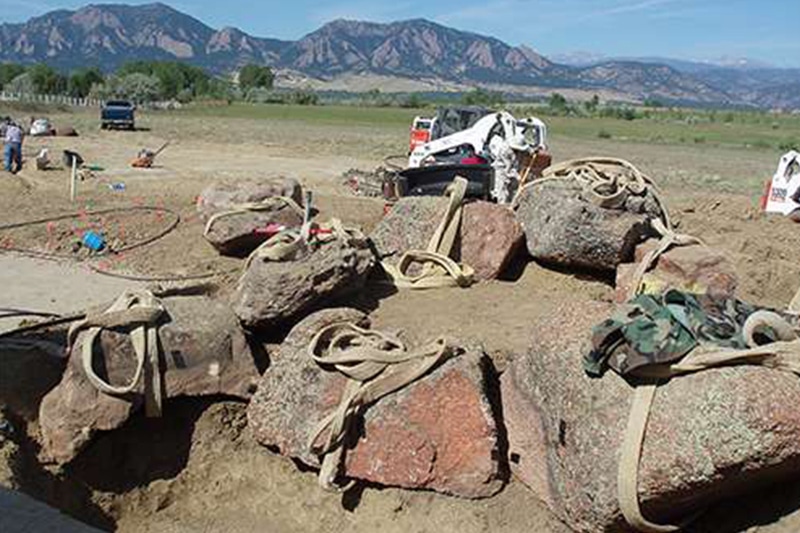
For retaining walls, garden borders, and dramatic focal points, moss rock and Colorado boulders deliver both function and visual impact. These materials are naturally weathered, so they look like they’ve been part of your landscape forever rather than something that just got trucked in.
Boulders work particularly well for erosion control on sloped properties, a common situation in Superior. They can terrace a hillside, direct water flow, and create planting pockets without requiring extensive concrete work. Moss rock, with its lichen-covered surfaces and irregular shapes, adds texture and character to garden beds and water features.
We source these materials locally whenever possible. Beyond supporting Colorado suppliers, locally quarried stone tends to match the existing geology, so your landscape looks cohesive rather than imported.
Concrete and Pavers for Versatile Hardscaping
Natural stone is beautiful, but it’s not always the right fit for every application or budget. Concrete and manufactured pavers offer versatility, durability, and design flexibility that make them worth serious consideration for Colorado landscape builds.
Poured concrete remains a workhorse material for driveways, large patios, and pool decks. Modern stamped and colored concrete can mimic the look of natural stone, brick, or even wood at a fraction of the cost. We’ve built stamped concrete patios in Superior that homeowners initially mistook for flagstone installations.
The key with concrete in Colorado is proper installation. That means adequate base preparation (remember that clay soil), appropriate thickness, control joints to manage cracking, and sealing to protect against moisture penetration and UV damage. Cut corners on any of these, and you’ll see problems within a few years.
Concrete pavers, interlocking units manufactured to precise specifications, offer some advantages over poured concrete. They’re easier to repair if damage occurs since you can pop out individual units rather than patching or replacing entire sections. The joints between pavers also provide some flexibility that can accommodate minor ground movement.
For outdoor kitchen islands, fire features, and decorative walls, we also work with ClifRock panel systems. These engineered structural panels create the look of stacked stone while providing a stable base for countertops, grills, and other built-in features. They’re lighter than solid stone, faster to install, and engineered to handle outdoor conditions.
One benefit of concrete and pavers that homeowners appreciate: they won’t rot, split, or decay like wood alternatives. In Colorado’s dry climate with intense sun exposure, wood decks and structures require significant ongoing maintenance. Hardscape materials give you that outdoor living space without the annual staining and sealing routine.
Drought-Tolerant Mulch and Ground Cover Materials
Hardscaping gets a lot of attention, but the materials you use around your plantings matter just as much for a successful Colorado landscape. The right mulch and ground cover conserve water, regulate soil temperature, suppress weeds, and give your beds a finished look.
Organic mulches like shredded hardwood, cypress, and pine blends serve multiple functions. They break down over time, adding organic matter to Colorado’s often-depleted soils. They also help retain the moisture that does reach your plants, crucial when you’re dealing with watering restrictions or simply trying to keep your utility bills reasonable.
For Superior landscapes, we typically recommend a 2-3 inch layer of organic mulch around trees, shrubs, and perennial plantings. Keep it pulled back a few inches from plant stems and tree trunks to prevent rot issues.
Inorganic ground covers, including decorative rock, pea gravel, and decomposed granite, work well in xeric landscape designs that emphasize drought tolerance. They don’t break down, so you won’t need to refresh them as often as organic mulch. And they complement the native Colorado aesthetic that many Superior homeowners prefer.
Rubber mulch made from recycled materials has gained popularity for playgrounds and some decorative applications, but we generally steer residential clients toward natural options. They integrate better visually and contribute to soil health over time.
The right ground cover choice depends on your overall landscape design. Native and xeric plantings often look best with rock or gravel. Traditional perennial gardens and shade plantings typically benefit more from organic mulch that enriches the soil as it decomposes.
Gravel and Crushed Stone for Functional Landscaping
Gravel and crushed stone are the unsung heroes of Colorado landscape builds. They’re not glamorous, but they solve problems and provide functional benefits that more expensive materials can’t match.
Pea gravel, those small, rounded stones about the size of a pea, works beautifully for pathways, patios, and ground cover in xeric designs. It’s comfortable underfoot, drains quickly, and provides a satisfying crunch when you walk on it. The natural tan, gray, and brown tones blend seamlessly with Colorado’s landscape. We use it frequently around fire pits, between stepping stones, and in dry creek bed features.
River rock comes in various sizes from small decorative stones up to larger cobbles. The smooth, water-worn surfaces add visual interest and work well for drainage swales, dry creek beds, and accent areas. Larger river rock can create borders and define spaces without the permanence of mortared stone.
Crushed granite and decomposed granite offer a more refined look for pathways and patios. They compact to form a relatively firm surface while still allowing water infiltration. In the right setting, decomposed granite can provide an elegant, Old World feel.
For purely functional applications, drainage solutions, base material under pavers, and foundation backfill, various grades of crushed stone and gravel do the job cost-effectively. Proper drainage is critical in Colorado to prevent ice damage, erosion, and foundation issues, so don’t overlook these utilitarian materials when planning your project.
One practical tip: gravel and loose stone materials do require some maintenance. They can migrate out of beds over time, especially on slopes, and may need periodic replenishment or re-grading. Proper edging helps contain them and reduces long-term upkeep.
Choosing Sustainable and Locally Sourced Materials
Where your landscape materials come from matters, both for environmental reasons and practical ones.
Locally sourced stone and gravel have already proven they can handle Colorado conditions. Stone quarried from the Front Range has weathered our freeze-thaw cycles, our UV exposure, and our temperature swings for thousands of years. That’s a track record you can trust. Materials shipped in from other regions may look similar but behave differently when exposed to our specific climate.
There’s also the transportation factor. Heavy materials like stone, gravel, and pavers cost more to ship long distances, and that transportation has environmental impacts. Sourcing from Colorado suppliers reduces both your project cost and its carbon footprint.
At J & S Landscape, we’ve built relationships with local quarries and suppliers over our 40+ years in business. That means we know which sources provide consistent quality and which materials perform best in specific applications. It also means we can often get better pricing than homeowners shopping on their own.
Sustainability goes beyond sourcing, though. Consider how your material choices affect long-term water use, maintenance requirements, and durability. A landscape built with quality materials and proper installation techniques will last decades with minimal intervention. A landscape built with cheap materials or shortcuts often needs costly repairs or replacement within years, which means more materials consumed, more waste generated, and more money spent.
Native plantings, permeable hardscaping, and water-wise design aren’t just trendy buzzwords. They’re practical approaches that make sense for Colorado’s environment and for homeowners who want beautiful outdoor spaces without excessive maintenance or resource consumption.
Conclusion
Building a landscape in Superior that looks great and lasts requires thoughtful material selection from the start. Natural stone like flagstone and moss rock connects your property to Colorado’s terrain while standing up to our challenging climate. Concrete and pavers provide durable hardscaping solutions for patios, walkways, and outdoor living areas. The right mulch and ground covers protect your plantings and conserve water in our semi-arid environment. And functional materials like gravel and crushed stone solve drainage issues while adding visual interest.
The common thread? Quality materials, properly installed, with an understanding of how Colorado’s unique conditions affect everything from soil movement to UV exposure.
If you’re planning a landscape project in Superior or anywhere in Boulder County, we’d love to help. J & S Landscape has been designing and building outdoor spaces across Northern Colorado for over four decades. We handle everything from initial consultations and design through construction and ongoing maintenance, patios, pergolas, outdoor kitchens, water features, native plantings, and more.
No project is too big or too small. Give us a call or reach out through our website to schedule a consultation. Let’s talk about your vision for your property and how the right materials can help bring it to life.
Frequently Asked Questions
What are the best materials for landscape builds in Superior, Colorado?
The top materials for Colorado landscape builds in Superior include natural stone like flagstone and sandstone, concrete pavers, moss rock boulders, and drought-tolerant ground covers. These materials withstand the Front Range’s freeze-thaw cycles, intense UV exposure, and clay-heavy soil conditions.
Why does flagstone work well for Colorado landscaping projects?
Flagstone handles Colorado’s climate exceptionally well, ages beautifully, and complements the surrounding mountain terrain. It’s versatile for patios, pathways, and stepping stones. When properly sourced for local conditions, flagstone resists flaking during freeze-thaw cycles that damage inferior stone varieties.
How do I choose between concrete pavers and natural stone for my patio?
Concrete pavers offer easier repairs, design flexibility, and lower costs, while natural stone provides unique aesthetics and a timeless look. Both work well in Colorado when properly installed with adequate base preparation for clay soil movement and sealed against moisture and UV damage.
What ground cover materials are best for drought-tolerant landscaping in Colorado?
Decorative rock, pea gravel, and decomposed granite are ideal for xeric landscape designs in Colorado. These inorganic materials don’t require refreshing like organic mulch, conserve water, and complement the native Front Range aesthetic preferred by many Superior homeowners.
Does clay soil in Superior affect landscape material choices?
Yes, Superior’s clay-heavy soil expands when wet and shrinks when dry, creating ground movement that can undermine patios, walkways, and retaining walls. Proper base preparation is essential, and flexible installation methods like dry-laid stone can better accommodate soil shifting.
Are locally sourced landscape materials better for Colorado projects?
Locally sourced stone and gravel from Front Range quarries have already proven they handle Colorado’s freeze-thaw cycles, UV exposure, and temperature swings. They typically cost less due to reduced shipping, have lower environmental impact, and visually match the existing regional geology.