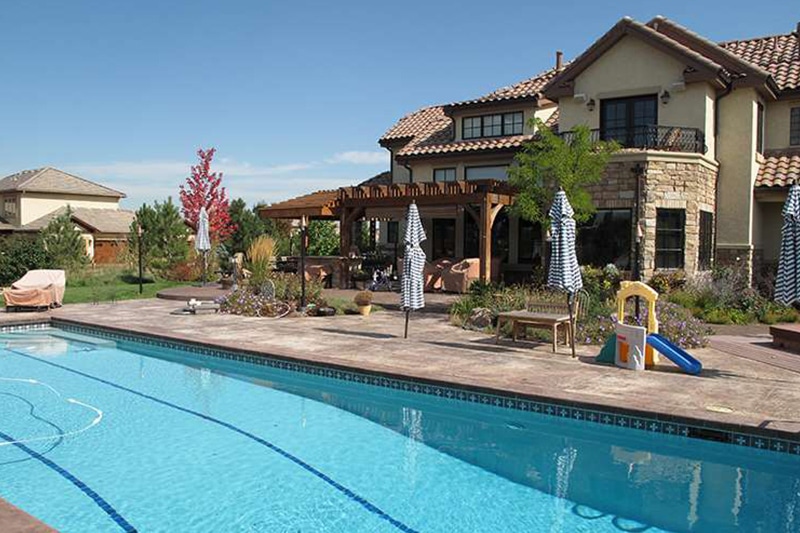
There’s something special about stepping into your backyard on a warm Colorado evening and seeing a pool that’s unmistakably yours. Not a cookie-cutter rectangle that could belong to any subdivision in America, but a thoughtfully designed aquatic retreat that works with your land, your lifestyle, and the unique character of the Front Range.
At J&S Landscape, we’ve spent over 40 years helping homeowners throughout Longmont, Boulder, and the surrounding communities transform their outdoor spaces. And when it comes to custom pool design options for Longmont yards, we’ve learned that success starts with understanding what makes this region different, from the climate considerations to the terrain challenges to the lifestyle opportunities that nearly 300 days of sunshine make possible.
Whether you’re dreaming of a sleek infinity edge that mirrors the mountain views or a naturalistic pool that looks carved right out of the foothills, we’re here to walk you through the possibilities. Let’s jump into what makes pool design in Longmont unique and how you can create something truly exceptional.
Understanding Longmont’s Climate and Terrain for Pool Planning
Longmont sits at roughly 5,000 feet elevation, and that simple fact changes everything about pool design. The intense UV exposure at altitude means materials fade faster, water evaporates more quickly, and heating systems work harder than they would at sea level. We factor all of this into every pool we design.
The region’s semi-arid climate brings hot summers but cool nights, temperature swings of 30 degrees or more aren’t unusual. This thermal cycling stresses pool structures in ways that coastal or southern climates simply don’t experience. Freeze-thaw cycles during shoulder seasons demand careful attention to material selection and plumbing layout. Get these details wrong, and you’re looking at cracked tile, damaged equipment, and expensive repairs down the road.
Then there’s the soil. Much of Longmont sits on expansive clay that swells when wet and contracts when dry. This isn’t a deal-breaker for pool construction, far from it, but it requires proper engineering. We work with soil assessments to determine foundation requirements and often recommend specific excavation and backfill techniques to prevent shifting over time.
Water scarcity matters here too. Colorado’s water laws are among the most complex in the nation, and responsible pool ownership means designing for efficiency. That might include covers to reduce evaporation, variable-speed pumps that use less energy, and thoughtful sizing that balances your enjoyment with environmental stewardship.
The good news? All these challenges have solutions. And honestly, they often lead to better, more durable pools than you’d get in easier climates.
Popular Pool Shapes and Styles for Colorado Backyards
The shape and style of your pool sets the entire tone for your outdoor living space. We see two main camps among Longmont homeowners: those drawn to organic, nature-inspired designs and those who prefer clean architectural lines. Both work beautifully here, it really comes down to your home’s aesthetic and how you envision using the space.
Freeform and Natural Designs
Freeform pools feel like they belong to the landscape rather than being imposed upon it. Think gentle curves, irregular edges, and integration with natural stone that echoes the boulders you’d find hiking in the foothills. These designs work particularly well for homeowners who want their pool to feel like a mountain oasis, a private retreat that connects them to Colorado’s stunning natural environment.
We often incorporate features like beach entries (gradual slopes into the water rather than steps), integrated boulder groupings, and native plantings right up to the water’s edge. The effect is something that looks like it was discovered rather than built. For families with young children, the gentle transitions and organic shapes also create safer, more accessible swimming environments.
Natural designs pair exceptionally well with our ClifRock panel systems, which allow us to create water features and grottos that look carved from mountain rock but offer the durability of engineered construction.
Geometric and Modern Layouts
On the other end of the spectrum, geometric pools make a bold architectural statement. Rectangles, L-shapes, and precise angles create a sophisticated backdrop for contemporary homes. These designs tend to maximize swimming space for their footprint, great if you’re working with a smaller yard or want dedicated lap swimming lanes.
Modern geometric pools often feature vanishing edges, perimeter overflow systems, and integrated spa sections that maintain the clean lines of the main pool. The material palette typically leans toward smooth plaster finishes, glass tile accents, and concrete or travertine decking.
We’ve noticed that geometric designs are particularly popular among homeowners who plan to integrate their pool with outdoor kitchens and formal entertaining spaces. The structured shapes create natural zones for different activities.
Material and Finish Choices for Durability
At 5,000 feet, material selection isn’t just about aesthetics, it’s about longevity. The wrong choices won’t just look tired after a few seasons: they’ll fail.
For pool shells, we typically recommend gunite or shotcrete construction for custom designs. Unlike pre-formed fiberglass pools, these allow complete flexibility in shape and size while providing the structural integrity needed to handle Longmont’s soil conditions. The concrete shell gets finished with your choice of interior surface.
Plaster remains a popular and economical finish option. Modern aggregate plasters incorporate quartz or pebble materials that improve durability and create interesting visual textures. For the ultimate in longevity, glass tile finishes can last decades and offer endless color possibilities, though they come at a premium price point.
Decking materials need to handle everything from blazing summer sun to winter snow removal. Natural stone like flagstone or travertine provides timeless beauty and stays cooler underfoot than darker materials. Stamped concrete offers tremendous design flexibility at a lower cost, and we can create patterns that complement your home’s architecture. For areas around hot tubs or where you want added comfort, composite decking provides a warm, splinter-free surface.
Coping, the cap around the pool’s edge, takes significant abuse from freeze-thaw cycles and pool chemicals. We recommend natural stone or cast concrete coping with proper overhang to protect the bond beam beneath.
Equipment matters too. Variable-speed pumps, saltwater chlorination systems, and high-efficiency heaters all contribute to lower operating costs and longer service life. We’ll help you balance upfront investment against long-term savings.
Custom Features to Enhance Your Pool Experience
This is where custom pools really separate themselves from the ordinary. The features you choose transform a swimming pool into an experience, a destination within your own property.
Water Features and Lighting
Water features bring movement, sound, and visual drama to your pool. Options range from simple deck jets that arc gracefully into the water to elaborate rock waterfalls that tumble from raised planters. Sheer descent waterfalls create a smooth curtain of water that’s both visually striking and surprisingly quiet. Bubblers in shallow areas add playful movement that kids love.
At J&S Landscape, we specialize in water features of all shapes and sizes. Our expertise extends from lavish homages to Colorado’s natural waterfalls and rivers to more contained fountain features. Using our ClifRock panel systems, we can create grottos and rock formations that look authentically weathered but are engineered for decades of performance.
Lighting transforms your pool after dark, and in Colorado, that’s when the magic really happens. LED technology has revolutionized pool lighting with energy efficiency and color-changing capabilities. Underwater lights create dramatic effects, while perimeter lighting illuminates decking for safety. Strategic uplighting on water features and landscape elements extends the visual experience beyond the pool itself.
Built-In Spas and Heating Systems
A built-in spa extends your pool season significantly. When we design integrated spas, we typically position them adjacent to the main pool with a spillover connection, allowing heated water to cascade into the cooler pool. This creates a thermal zone where swimmers can transition gradually and adds a continuous water feature effect.
Spa placement matters for practical reasons too. You’ll want wind protection, easy access from the house during cooler months, and privacy from neighbors. We often incorporate raised spa walls or strategic boulder placement to address these concerns.
For heating, you’ve got options. Gas heaters warm water quickly and work well for spas that you want available on demand. Heat pumps operate more efficiently for maintaining temperature over time but work best when ambient temperatures stay above 50 degrees. Solar heating makes sense for extending your season without ongoing fuel costs, though it won’t get you into a hot spa on a January evening.
Many of our clients opt for combination systems, gas for the spa and heat pump or solar assist for the main pool.
Landscaping Integration and Outdoor Living Spaces
A pool doesn’t exist in isolation. The most successful pool projects treat the entire backyard as an integrated outdoor living environment. This is where our 40-plus years of landscape experience really pays off.
Think about how you actually want to use your yard. Do you envision large gatherings with multiple activity zones? Intimate family evenings around the fire? Both? The pool anchors the design, but the surrounding elements, patios, shade structures, outdoor kitchens, fire features, determine how the space actually functions.
We often design pool decking that transitions seamlessly into larger patio areas, using consistent materials to create visual continuity. Pergolas provide shade for seating areas without fully blocking Colorado’s beloved sunshine. For homeowners who want year-round usability, we incorporate heaters, fire pits, and even covered structures with fans.
Outdoor kitchens have become increasingly popular additions. Using ClifRock panel systems, we create custom kitchen islands, bars, and built-in grills that complement your pool’s aesthetic. There’s something deeply satisfying about grilling dinner while the kids swim just a few feet away.
Planting design around pools requires some thought. You want privacy screening and shade in strategic locations, but you also need to minimize debris falling into the water. We favor native and adaptive plants that thrive in Longmont’s climate without excessive water or maintenance. Strategic placement of ornamental grasses, perennials, and carefully chosen shrubs softens hardscape edges while keeping the pool area clean.
Ponds, fountains, and other secondary water features can extend the aquatic theme throughout your property, creating a cohesive landscape that feels intentional from every angle.
Permits and Regulations for Longmont Pool Installation
Let’s talk about the less glamorous but essential side of pool installation: permits and regulations. Longmont, like most Colorado municipalities, has specific requirements governing pool construction. Navigating these properly upfront prevents costly delays and modifications later.
You’ll need a building permit before breaking ground. The application requires site plans showing pool location, setbacks from property lines and structures, and details about electrical and plumbing work. Most jurisdictions require pools to be set back at least 5 feet from property lines and 10 feet from structures, though local codes vary.
Barrier requirements are non-negotiable. Colorado law and local ordinances mandate that pools be enclosed by fencing or other barriers at least 48 inches high with self-closing, self-latching gates. The specifics matter, the gap under the fence, the distance between balusters, the direction the gate swings, all are spelled out in code. Some homeowners incorporate the house itself as part of the barrier, but this requires door alarms and other safety measures.
Electrical work must meet stringent safety codes, including bonding and grounding requirements and proper GFCI protection. Plumbing permits cover the pool’s circulation system and any connections to the home’s water supply or sewage system.
We handle permitting as part of our process. After 40 years working in Longmont, Boulder, and surrounding communities, we know the inspectors, understand the requirements, and build relationships that help projects move smoothly through approval.
One more consideration: HOA restrictions. If your property falls within a homeowners association, you’ll likely need architectural approval before the city permit process even begins. Review your covenants early to understand any limitations on pool location, size, or fencing style.
Conclusion
Custom pool design options for Longmont yards are as varied as the homeowners who dream them up. From the initial planning that accounts for our unique climate and terrain to the finishing touches that make your pool unmistakably yours, every decision shapes the final result.
What strikes us most, after four decades of building pools and outdoor living spaces across Northern Colorado, is how personal these projects are. Your pool reflects how you want to live, whether that’s hosting summer parties, swimming laps at dawn, or simply floating under a Colorado sunset with nowhere else to be.
At J&S Landscape, we believe the best pools feel inevitable, like they’ve always belonged exactly where they are. That takes careful design, quality materials, skilled construction, and a team that genuinely understands this place we all call home.
Ready to explore what’s possible for your Longmont yard? We’d love to walk through your options and help you envision something extraordinary.