
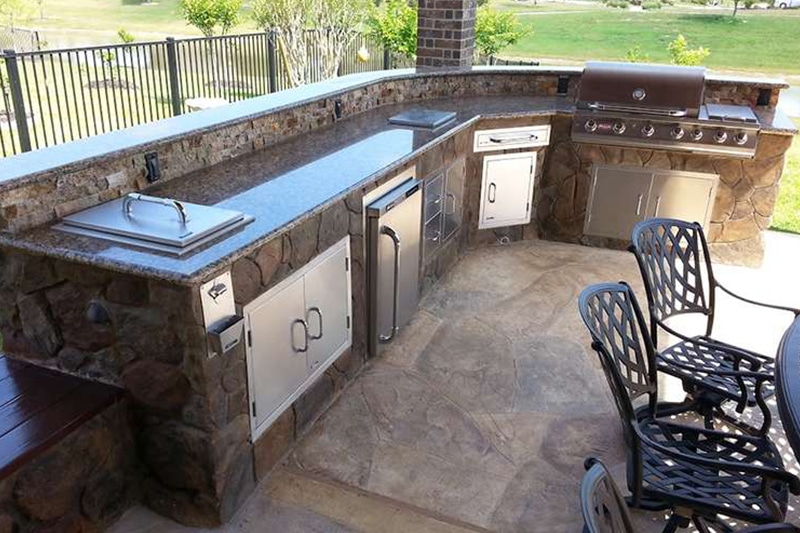
Building an outdoor kitchen in Boulder isn’t quite like building one anywhere else. With nearly 300 days of sunshine, dramatic temperature swings, and high-altitude conditions, we’re working with a climate that demands careful appliance selection. Get it right, and you’ll have a cooking space that serves you year-round, grilling steaks in July, smoking ribs during a crisp October afternoon, or even firing up a pizza oven on a mild winter evening. Get it wrong, and you’ll be replacing equipment far sooner than you’d like. We’ve helped countless Boulder homeowners navigate these decisions, and we’ve learned what works in our mountain environment. Here’s what you need to know when choosing appliances for your outdoor kitchen in Boulder.
Why Boulder’s Climate Demands Specific Outdoor Kitchen Appliances
Boulder sits at roughly 5,430 feet above sea level, and that elevation changes everything about outdoor cooking. The thinner air affects combustion in gas grills, meaning standard appliances often underperform or struggle to maintain consistent temperatures. We’ve seen homeowners invest in beautiful grills only to discover they can’t get a proper sear on a steak.
Then there’s the weather. Boulder’s famous sunny days come with intense UV exposure that degrades lesser materials quickly. Our temperature swings are equally punishing, it’s not unusual to see 50-degree temperature differences between day and night, especially in spring and fall. That constant expansion and contraction takes a toll on appliance seals, electronics, and structural components.
Winter brings its own challenges. While we enjoy milder winters than much of Colorado, freezing temperatures still threaten water lines, refrigeration units, and any appliance with exposed plumbing. And let’s not forget our occasional hailstorms, which can damage unprotected equipment in minutes.
The bottom line? Standard outdoor kitchen appliances designed for sea-level, temperate climates often fail prematurely here. We always recommend investing in equipment specifically rated for high-altitude use and extreme weather fluctuations. It costs more upfront, but it saves significant headaches down the road.
Essential Appliances Every Boulder Outdoor Kitchen Needs
Every outdoor kitchen starts with core appliances, but what you need in Boulder differs from what works in, say, Phoenix or Miami. Here’s our breakdown of the essentials.
Built-In Grills and Smokers for High-Altitude Cooking
Your grill is the heart of any outdoor kitchen, and at Boulder’s elevation, you need one that’s designed for the job. Look for grills with high-altitude orifices, these have larger openings that compensate for reduced oxygen and air pressure. Without this adjustment, gas grills produce weaker flames and struggle to reach proper cooking temperatures.
We typically recommend grills with at least 60,000 BTUs for serious cooking at altitude. Infrared burners are particularly effective here because they radiate heat directly rather than relying solely on convection, which is less efficient in thin air.
Smokers present similar challenges. Low-and-slow cooking requires consistent temperature control, which is harder to achieve at elevation. Insulated smokers with precise temperature controls perform best. Many of our clients opt for combination grill-smoker units to maximize versatility without taking up too much space.
Refrigeration and Storage Solutions That Handle Temperature Swings
Outdoor refrigeration in Boulder needs to handle extreme conditions. Standard outdoor-rated refrigerators are designed for temperatures between 45°F and 100°F, but we regularly see temperatures outside that range.
Look for units with extended operating temperature ranges and robust insulation. Compressor-based refrigerators generally outperform thermoelectric models in our climate because they can actively cool rather than just reducing temperature relative to ambient air.
Storage solutions matter too. We recommend weatherproof cabinetry with marine-grade hardware that won’t corrode. Stainless steel drawer systems with sealed bearings hold up better against dust, moisture, and temperature changes. Proper storage keeps your accessories, utensils, and supplies protected when you’re not cooking.
Choosing Between Gas, Electric, and Pellet Appliances
The fuel source debate takes on extra dimensions at altitude. Each option has distinct advantages and limitations for Boulder outdoor kitchens.
Natural gas remains our most popular recommendation for primary cooking appliances. It’s convenient, cost-effective, and provides instant heat. When we build out and hook up outdoor kitchens, running a dedicated gas line ensures you never run out of fuel mid-cookout. Natural gas grills with high-altitude conversion kits perform exceptionally well here.
Propane offers similar benefits with more flexibility in placement since you’re not tied to a gas line. But, propane tanks can struggle in cold weather, the liquid doesn’t vaporize as efficiently below freezing, which can reduce burner performance on cold evenings.
Electric appliances are gaining popularity, especially for secondary cooking tasks. Electric smokers, warming drawers, and griddles work consistently regardless of altitude since they don’t rely on combustion. The downside? You need adequate electrical infrastructure, and power outages leave you without cooking capability.
Pellet grills and smokers have a dedicated following in Boulder. They offer excellent temperature control and impart great flavor. But, pellets can absorb moisture during Colorado’s spring snow season, affecting burn consistency. Storing pellets in sealed containers is essential.
Our recommendation? A gas grill as your primary cooking appliance, supplemented by electric warming and prep equipment. This combination offers reliability, performance, and versatility for Boulder’s conditions.
Durability Features to Look for in Mountain Weather Conditions
When evaluating outdoor kitchen appliances for Boulder, durability features separate equipment that lasts from equipment that fails within a few seasons.
Stainless steel grade matters enormously. Look for 304-grade stainless steel at minimum, it offers superior corrosion resistance compared to cheaper 430-grade steel. For components exposed to direct weather, 316-grade marine stainless provides even better protection against our occasionally harsh conditions.
Sealed burners and electronics protect against moisture infiltration. Our afternoon thunderstorms can be intense, and even appliances under a pergola may get wet. Quality grills feature sealed ignition systems and protected control panels.
UV-resistant components prevent premature degradation. Plastic knobs, handles, and seals can crack and fade under Boulder’s intense sun exposure. We always recommend appliances with UV-stabilized materials or all-metal construction.
Reinforced construction helps appliances withstand hail. While we can’t hail-proof everything, grills and refrigerators with heavier-gauge steel and recessed components fare better than flimsy alternatives.
Weatherproof covers are non-negotiable. Even the most durable appliances benefit from quality covers during extended periods of non-use. We suggest custom-fitted covers rather than universal options, they provide better protection and last longer.
Pay close attention to warranties, too. Manufacturers confident in their products’ durability typically offer longer coverage periods. A five-year warranty beats a one-year warranty, and lifetime burner warranties indicate a manufacturer who stands behind their construction quality.
Conclusion
Choosing appliances for your outdoor kitchen in Boulder requires understanding how our unique climate affects equipment performance and longevity. Altitude, temperature swings, UV exposure, and occasional severe weather all play roles in what works, and what doesn’t, in the long run. By selecting high-altitude-rated grills, robust refrigeration, appropriate fuel sources, and durably constructed equipment, you’re setting yourself up for years of outdoor cooking enjoyment. We’ve helped Boulder homeowners create stunning outdoor kitchens for decades, and the right appliance choices make all the difference between a space you use constantly and one that disappoints.