
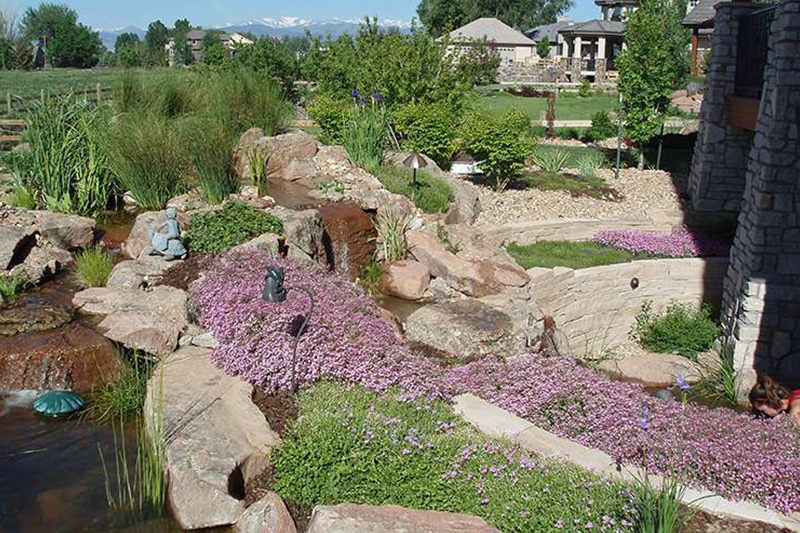
There’s a moment when you step out onto your patio and realize the journey doesn’t end there. Where does your eye go next? Where do your feet want to wander? In Boulder, where nearly 300 days of sunshine invite us outdoors and dramatic terrain shapes every property, connecting patios to pathways isn’t just a design detail, it’s the difference between a disjointed backyard and a cohesive outdoor living experience. We’ve spent over 40 years helping homeowners create seamless transitions between hardscape elements, and we’ve learned that thoughtful connections transform how you move through and enjoy your landscape.
Why Thoughtful Patio-to-Pathway Connections Matter
When patios and pathways feel disconnected, your entire landscape suffers. You end up with awkward stepping patterns, dead zones where no one walks, and a visual disconnect that makes even beautiful materials look like afterthoughts. On the other hand, intentional connections create what designers call “flow”, that intuitive movement through space that feels natural rather than forced.
Think about how you actually use your outdoor areas. You step out from your kitchen, cross the patio, and then… what? If there’s no clear invitation to continue into the garden, toward a fire pit, or around to a side yard, you’ve essentially built a landing pad with no runway. Pathways extend your living space and give purpose to every corner of your property.
We’ve seen firsthand how well-designed connections increase the usable square footage of a landscape. A patio that flows into a pathway leading through a perennial garden, then curves toward an outdoor kitchen, turns three separate features into one continuous experience. It’s not about adding more hardscape, it’s about making what you have work harder and smarter.
Designing for Boulder’s Unique Terrain and Climate
Boulder throws some curveballs that flat-land designers never have to consider. Our properties pitch and roll with the foothills. Soil composition varies wildly from one neighborhood to the next. And then there’s the weather: intense sun, freeze-thaw cycles that can heave poorly installed hardscape, and afternoon thunderstorms that test drainage on every slope.
We approach each project by working with the terrain rather than fighting it. That might mean stepping a pathway down a grade with natural stone risers instead of forcing a level connection. Or incorporating boulder walls, using locally sourced materials, to create terraced transitions between a higher patio and a lower garden path.
Drainage is non-negotiable here. Water needs somewhere to go, and pathways can either channel it effectively or create problems. We design slight crowns or cross-slopes into our pathways and ensure patio-to-pathway junctions don’t become collection points for runoff. Permeable materials also play a role, especially where stormwater management matters.
Climate-wise, we’re always thinking about how materials will perform through Colorado’s seasonal swings. That flagstone entry that looks perfect in July? It needs to handle ice and snow removal come December without cracking or becoming dangerously slick.
Choosing Materials That Unify Your Outdoor Spaces
Material selection is where patio-to-pathway connections either come together or fall apart. The goal isn’t necessarily to use identical materials everywhere, that can actually feel monotonous. Instead, we look for cohesion through complementary textures, colors, and scale.
Natural stone remains our go-to for Boulder landscapes. Flagstone offers irregular shapes that blend beautifully with the surrounding environment and can transition from a more formal patio setting into rustic garden paths. Sandstone and slate bring warmth and variation that complement Colorado’s natural palette.
Stamped concrete provides another option when budget or design calls for it. We’ve installed stamped concrete patios with matching pathway extensions that mimic natural stone at a lower price point. The key is ensuring the pattern and color work with existing architectural elements and any natural stone accents.
For pathways specifically, materials like decomposed granite, pea gravel with stone borders, or stepping stones set in groundcover can create softer transitions while still connecting visually to a more structured patio. We often use the same stone on pathway borders that appears in the patio’s main field, it’s a subtle trick that ties everything together.
Whatever combination you choose, consider maintenance requirements alongside aesthetics. Some materials age gracefully with minimal care: others demand regular sealing or resetting.
Layout Strategies for Natural Traffic Flow
Getting the layout right requires thinking like a user, not just a designer. We walk properties multiple times before sketching anything, observing where people naturally want to go. Where does the dog run? What’s the most direct route from the grill to the dining area? Which view deserves a destination point?
Primary pathways should connect high-traffic zones: back door to patio, patio to garden shed, outdoor kitchen to seating area. These paths need sufficient width, at least 36 inches for comfortable single-file walking, wider if you want two people to stroll side by side. Secondary paths can narrow down for more intimate journeys through plantings or toward a quiet bench.
We also consider approach angles. A pathway that meets a patio at a harsh 90-degree angle feels abrupt. Softening that arrival with a gentle curve or widening the pathway as it reaches the patio creates a more welcoming transition.
Incorporating Curves, Angles, and Transitions
Straight lines have their place, especially alongside modern architecture or when emphasizing a direct sight line. But Boulder’s organic landscape often calls for curves that echo natural forms. A curving pathway can follow the contour of a hillside, wrap around existing trees and boulders, or simply introduce visual interest where straight would feel rigid.
Transitions between materials deserve special attention. Where a stone patio meets a gravel pathway, for instance, we’ll typically install a border course, perhaps a row of the same stone set on edge, to create a clean but connected boundary. This prevents gravel migration while visually announcing the shift.
Changes in elevation need thoughtful handling too. Steps should feel proportional to the pathway width, and landing areas at the top and bottom allow for safe, comfortable pacing. Lighting at these transitions isn’t just aesthetic, it’s essential for safety during Boulder’s early sunsets in winter.
Balancing Aesthetics With Practical Functionality
Beautiful pathways that nobody uses are a waste of stone. Every design decision we make balances how something looks against how it performs in daily life.
Accessibility matters more than people initially realize. That charming stepping-stone path might photograph well, but is it manageable when you’re carrying groceries or a tray of food from the outdoor kitchen? Will grandparents navigate it safely? We often recommend continuous surfaces for primary routes, saving the stepping stones for secondary garden paths.
Maintenance is another practical consideration. Joints between pavers collect debris and can sprout weeds if not properly installed with polymeric sand or tight spacing. Pathways through garden beds need edging to keep mulch from migrating onto the walking surface.
Then there’s the relationship between hardscape and softscape. Pathways shouldn’t feel like they’re fighting the plants around them, they should coexist. We design with mature plant sizes in mind, ensuring that perennials won’t encroach on walking space in three years and that tree roots won’t heave pavers down the road.
Lighting, irrigation crossings, and utility access points also factor into practical design. Nothing ruins a beautiful pathway faster than having to tear it up because someone forgot to plan for the irrigation line beneath it.
At J&S Landscape, we handle these details during the design phase so you’re not dealing with surprises after installation. Our team coordinates all the elements, from the initial consultation through construction, to deliver outdoor spaces that function as beautifully as they look.
Conclusion
Connecting patios to pathways is really about connecting experiences, creating a landscape that invites movement, encourages exploration, and functions effortlessly through every season. In Boulder’s unique environment, that requires attention to terrain, climate, materials, and the practical realities of daily use. When these elements come together, your outdoor space stops being a collection of features and becomes a true extension of home.