Discover the top materials for Colorado landscape builds in Niwot. Learn which stone, gravel, and hardscape options handle freeze-thaw cycles and intense sun.
Top Materials for Colorado Landscape Builds in Niwot
If you’ve spent any time in Niwot, you know this isn’t your average suburban neighborhood. Tucked between Boulder and Longmont, Niwot sits at the edge of the Colorado foothills where the terrain can shift from flat prairie to rocky outcrops in a matter of yards. Add in our intense sun, unpredictable freeze-thaw cycles, and the fact that water is precious out here, and you’ve got a landscape that demands smart material choices.
At J & S Landscape, we’ve been designing and building outdoor spaces across Northern Colorado for over 40 years. In that time, we’ve learned exactly which materials hold up to our climate and which ones don’t. Whether you’re dreaming of a flagstone patio, a boulder retaining wall, or a gravel pathway winding through native plantings, the materials you choose will make or break your project. Let’s walk through the top materials for Colorado landscape builds in Niwot and why each one earns its spot on the list.
Key Takeaways
- Natural stone like flagstone and Colorado sandstone is ideal for Niwot landscape builds due to its durability against freeze-thaw cycles and UV exposure.
- Gravel and crusite provide excellent drainage solutions for clay-heavy soils while offering a cost-effective, low-maintenance option for pathways.
- Locally sourced moss rock and boulders blend seamlessly with the Colorado foothills and perform better in local climate conditions.
- Drought-tolerant mulches like rock mulch reduce water needs and withstand Niwot’s notorious winds better than organic alternatives.
- Choose materials that complement native plantings to create a sustainable landscape that looks natural and requires less maintenance over time.
- Proper installation with adequate base material and drainage is essential for any landscape material to last in Colorado’s demanding climate.
Understanding Niwot’s Unique Climate and Terrain
Before we jump into specific materials, it helps to understand what we’re working with here in Niwot. This area sits at roughly 5,000 feet elevation in a semi-arid climate zone. That means we get around 300 days of sunshine (great for outdoor living), but also intense UV exposure that can fade and crack lesser materials over time.
Winters bring another challenge altogether. Temperatures regularly swing from the teens to the 50s within a single week. That constant freeze-thaw cycle is brutal on anything that holds moisture, so porous materials without proper drainage will crack and crumble within a few seasons. We’ve seen it happen more times than we can count.
Then there’s the soil itself. Much of Niwot sits on clay-heavy ground that expands when wet and contracts when dry. Combine that with rocky outcrops and natural slopes, and you need materials that can handle movement without failing. Drainage isn’t optional here: it’s essential.
The good news? When you choose the right materials and install them correctly, a landscape build in Niwot can last for decades. The key is working with what the land gives you rather than fighting against it.
Natural Stone Options for Lasting Beauty
Natural stone is, hands down, one of the best investments you can make for a Colorado landscape build. It handles our climate beautifully, blends with the surrounding foothills, and only looks better as it ages.
Flagstone and Sandstone
Flagstone remains our most popular choice for patios, walkways, and entryways in Niwot. Its natural variation in color and texture means no two installations look exactly alike, and it creates that seamless transition between your home and yard that so many homeowners are after.
Colorado sandstone, in particular, comes in warm buff, tan, and reddish tones that complement the local landscape perfectly. It’s dense enough to handle foot traffic and weather exposure, but it does require proper installation with adequate base material and joint spacing to accommodate our freeze-thaw cycles.
We typically recommend flagstone for:
- Patio surfaces
- Garden pathways
- Entry areas and front walkways
- Pool surrounds
- Stepping stones through planting beds
The natural texture also provides good traction when wet, which matters during those sudden afternoon thunderstorms.
Colorado Moss Rock and Boulders
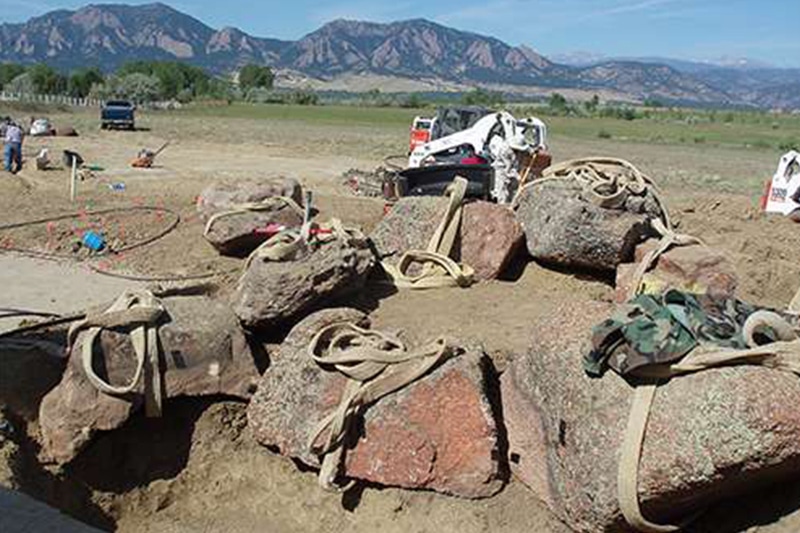
For retaining walls, garden borders, and dramatic accent features, locally sourced moss rock and boulders are hard to beat. These materials look like they’ve always been part of the landscape because, well, they basically have. They’re pulled from quarries right here in Colorado.
Moss rock gets its name from the lichen and moss that naturally grow on its surface, giving it an aged, organic appearance from day one. It’s excellent for dry-stack walls where you want a rustic, natural look rather than something more formal.
Boulders work beautifully for erosion control on slopes, as focal points in xeric gardens, or as natural seating around fire pits. When placed correctly, they create visual anchors that make a landscape feel grounded and intentional.
One thing we always tell clients: bigger is usually better with boulders. A few large specimens make a much stronger statement than a bunch of small ones scattered around.
Gravel and Crusite for Drainage and Pathways
Gravel might not be the most glamorous material, but it’s one of the most practical for Niwot landscape builds. It provides excellent drainage, requires minimal maintenance, and costs significantly less than stone or concrete.
For pathways and patios where you want permeability, pea gravel or crushed rock creates a casual, natural feel. It’s especially useful in areas where you need water to drain quickly rather than pool on the surface. Given our clay soils and occasional heavy rains, that’s a real consideration.
Crusite (also called crusher fines or decomposed granite) is another favorite. It compacts into a firm surface that’s easier to walk on than loose gravel while still allowing water to percolate through. It works particularly well for:
- Secondary pathways through gardens
- Base material under pavers or flagstone
- Drainage channels and swales
- Low-traffic patio areas
- Borders around planting beds
Color options range from tan and gold to gray and even reddish tones, so you can match the surrounding stone or create contrast. We often use crusite pathways to connect different areas of a property without the expense of full hardscape installation.
One practical note: gravel and crusite do need edging to keep them contained. Steel or aluminum landscape edging works well and stays nearly invisible once installed.
Durable Hardscape Materials for Patios and Retaining Walls
While natural stone offers unmatched beauty, manufactured hardscape materials have come a long way. They’re often more affordable, and modern options can look remarkably good while standing up to Colorado’s demanding climate.
Pavers and Concrete Options
Interlocking concrete pavers remain a solid choice for patios, driveways, and walkways. They’re manufactured to consistent dimensions, which makes installation faster and more predictable than natural stone. And because they’re set on a compacted base rather than mortared in place, they can flex slightly with ground movement without cracking.
Stamped concrete is another option we install frequently. It can mimic the look of flagstone, brick, or other materials at a lower cost per square foot. The key is proper installation with adequate control joints and a good sealer to protect against our UV exposure and freeze-thaw cycles.
For retaining walls, segmental concrete blocks offer structural strength with a clean, modern look. They’re engineered for stability and can handle significant loads when installed correctly. We use them for everything from small garden walls to major grade changes.
J & S Landscape has built countless patios using both natural stone and concrete options. The right choice depends on your budget, aesthetic preferences, and how you plan to use the space.
Timber and Composite Alternatives
Wood still has its place in Colorado landscaping, especially for decks, pergolas, and raised planting beds. Pressure-treated lumber handles ground contact reasonably well, though it will need maintenance over time. Cedar and redwood offer natural rot resistance and beautiful color, but they come at a premium.
Composite decking has become increasingly popular for good reason. It doesn’t splinter, warp, or require staining, and modern composites look much more natural than the early versions. For decks that get heavy sun exposure, composites can be worth the higher upfront cost.
For retaining walls, railroad ties and landscape timbers create a rustic look that fits well with mountain or cabin-style properties. They’re particularly useful for terracing slopes where you want a softer appearance than stone or concrete.
With nearly 300 days of sunshine here in Colorado, extending your living space outdoors just makes sense. The materials you choose should support that lifestyle for years to come.
Drought-Tolerant Mulches and Soil Amendments
In a climate where water is precious, the materials between your plants matter almost as much as the plants themselves. The right mulches and soil amendments can dramatically reduce water needs while improving plant health.
Organic mulches like shredded bark and wood chips help retain soil moisture, moderate root temperatures, and suppress weeds. They do break down over time (which actually improves soil quality), so plan on refreshing them every year or two.
For a more permanent solution, rock mulch is extremely popular in Niwot landscapes. It doesn’t decompose, doesn’t blow away in our notorious winds, and reflects heat away from plant roots. River rock, crushed granite, and decorative stone all work well depending on the look you’re going for.
A few considerations when choosing mulch:
- Rock mulch works best around established plants and in xeric beds. It can make the soil too warm for some vegetables and shallow-rooted perennials.
- Bark and wood chips are better around trees, shrubs, and perennial beds where you want soil improvement over time.
- Depth matters. Two to three inches of mulch is usually ideal. Much more than that can suffocate roots or create pest habitat.
On the soil amendment side, good quality compost is worth its weight in gold here. Our native soils tend to be low in organic matter, and compost improves both drainage in clay soils and water retention in sandy spots. We always recommend amending planting beds before installation rather than trying to fix soil problems later.
Choosing Materials That Complement Native Plants
One of the best things you can do for a Niwot landscape is let the surrounding environment guide your material choices. The foothills west of town offer a perfect template: warm-toned stone, weathered rock outcrops, and plants that have evolved to thrive in dry, sunny conditions.
When selecting materials for Colorado landscape builds, think about how they’ll look alongside native and drought-tolerant plantings. Warm sandstone pairs beautifully with ornamental grasses, rabbitbrush, and Apache plume. Moss rock creates natural pockets for sedums, penstemons, and other rock garden plants. Crusite pathways complement prairie gardens filled with black-eyed Susans and blue grama grass.
The goal is creating a landscape that feels like it belongs here, not something imported from a different climate or region. That approach isn’t just more beautiful: it’s more sustainable and easier to maintain over time.
Locally sourced materials also tend to perform better in our conditions. Stone quarried in Colorado has already proven it can handle our weather. It matches the natural geology. And it typically costs less than importing materials from out of state.
At J & S Landscape, we’ve always believed in working with locally sourced materials whenever possible. After 40 years of building landscapes across Boulder, Longmont, Niwot, and surrounding communities, we’ve developed relationships with the best suppliers in the region.
Conclusion
Choosing the right materials for your Niwot landscape build comes down to understanding what our climate demands and what will look beautiful for years to come. Natural stone offers timeless appeal and durability. Gravel and crusite provide practical drainage solutions. Manufactured hardscape materials deliver strength and consistency. And the right mulches keep your plants healthy while conserving water.
The common thread? Every material should be selected with Colorado’s freeze-thaw cycles, intense sun, and limited water in mind. Get that right, and your landscape will reward you season after season.
If you’re planning a landscape project in Niwot or anywhere in Northern Colorado, we’d love to help you think through your options. J & S Landscape has been designing, building, and maintaining outdoor spaces here for over four decades. We know which materials work, which suppliers deliver quality, and how to install everything to last.
Reach out to schedule a consultation. Let’s talk about your property, your vision, and how to bring it to life with materials that will stand the test of time.
Frequently Asked Questions
What are the best materials for Colorado landscape builds in Niwot?
The top materials for Colorado landscape builds in Niwot include natural flagstone and sandstone for patios, moss rock and boulders for retaining walls, gravel and crusite for drainage pathways, and interlocking concrete pavers for durability. These materials withstand Colorado’s freeze-thaw cycles, intense UV exposure, and clay-heavy soils.
Why is flagstone a popular choice for patios in Northern Colorado?
Flagstone is popular for Niwot patios because it handles Colorado’s climate exceptionally well, offers natural color and texture variation, and provides good traction when wet. Colorado sandstone in buff, tan, and reddish tones complements the local foothills landscape and ages beautifully over time.
How does the freeze-thaw cycle affect landscape materials in Colorado?
Colorado’s freeze-thaw cycles cause porous materials that retain moisture to crack and crumble within a few seasons. Temperatures can swing from the teens to the 50s in a single week, making proper drainage and material selection critical. Non-porous or well-installed materials with adequate joint spacing perform best.
What is crusite and why is it used in Niwot landscaping?
Crusite, also called crusher fines or decomposed granite, compacts into a firm walking surface while still allowing water drainage. It’s ideal for secondary pathways, base material under pavers, and low-traffic patio areas. Available in tan, gold, gray, and reddish tones, it’s an affordable alternative to full hardscape.
Is rock mulch or organic mulch better for Colorado landscapes?
Rock mulch is ideal for established plants and xeric beds—it doesn’t decompose or blow away in Colorado winds. Organic mulches like bark chips work better around trees and perennials where soil improvement is desired. Both help retain moisture in Colorado’s semi-arid climate when applied 2–3 inches deep.
How much does a flagstone patio cost in Colorado?
Flagstone patio costs in Colorado typically range from $15 to $30 per square foot installed, depending on stone quality, pattern complexity, and site preparation. Natural Colorado sandstone may cost more but offers superior durability and aesthetic appeal that complements local landscapes for decades.