
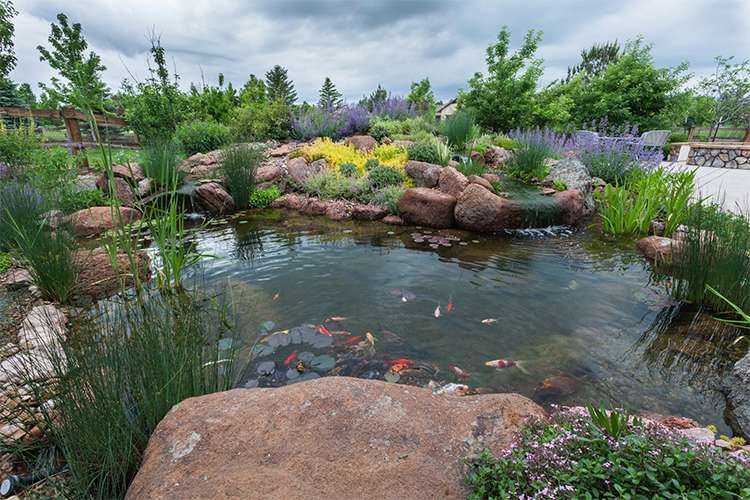
Building a koi pond in Broomfield isn’t quite like setting one up in, say, Southern California. Our Colorado climate throws some curveballs, dramatic temperature swings, intense UV exposure at altitude, and winters that can turn a peaceful water garden into a frozen challenge. But here’s the thing: when done right, a koi pond thrives in our region, offering year-round beauty and that unmistakable sense of tranquility that only flowing water and graceful fish can provide.
At J&S Landscape, we’ve spent over 40 years helping homeowners throughout Boulder, Broomfield, and the surrounding communities create stunning outdoor spaces. We’ve learned that successful koi keeping in Colorado comes down to three fundamentals: proper filtration, adequate depth, and consistent seasonal care. Get these right, and you’ll enjoy a thriving pond for decades. Get them wrong, and you’re in for endless headaches.
In this guide, we’ll walk you through everything you need to know about koi pond basics specific to our Broomfield climate, from understanding local weather patterns to maintaining crystal-clear water quality through every season.
Understanding Broomfield’s Climate for Koi Ponds
Broomfield sits at roughly 5,400 feet elevation, which creates some unique conditions for koi pond owners. We experience intense summer sun, low humidity, rapid evaporation, and those infamous 50-degree temperature swings that can happen in a single day. Understanding these factors is essential before you even break ground.
First, let’s talk about altitude. Higher elevation means stronger UV rays, which affects everything from algae growth to water temperature fluctuations. Your pond will heat up faster during sunny days and cool down quicker at night compared to ponds at lower elevations. This isn’t necessarily a problem, koi are remarkably adaptable, but it does influence how we approach design and maintenance.
Broomfield typically sees around 300 days of sunshine annually, which sounds great until you realize that sunshine accelerates algae blooms and evaporation. During peak summer months, you might lose an inch or more of water per week to evaporation alone. Planning for automatic water top-off systems or regular manual refilling becomes part of the routine.
Our winters are another consideration. While Broomfield doesn’t experience the extreme cold of higher mountain communities, we still see extended periods below freezing. Ground frost can penetrate several inches deep, and ice coverage on ponds is common from December through February. Koi can survive this, they’re cold-water fish, after all, but only if the pond is designed with proper depth and aeration to prevent complete freeze-over.
The good news? Our semi-arid climate means fewer issues with excessive rainfall overwhelming filtration systems, and our relatively mild shoulder seasons (spring and fall) give koi plenty of time to adjust gradually to temperature changes.
Ideal Pond Depth for Colorado’s Temperature Swings
Depth isn’t just about giving your koi room to swim, it’s about survival. In Broomfield’s climate, we recommend a minimum depth of 3 feet for any serious koi pond, with 4 feet being ideal for larger koi collections.
Why does depth matter so much here? Two words: thermal stability. Water temperature changes more slowly in deeper ponds. When we get those sudden cold snaps or heat waves, a deeper pond acts as a buffer, preventing the rapid temperature shifts that stress koi and weaken their immune systems.
During winter, depth becomes critical for another reason: ice. A pond that’s only 2 feet deep risks freezing solid during extended cold spells, which would obviously be fatal for your fish. At 4 feet, you maintain a column of unfrozen water at the bottom where koi can enter torpor (their version of hibernation) safely. The bottom water stays around 39-40°F even when surface ice forms, because that’s the temperature at which water is densest.
Summer brings the opposite challenge. Shallow ponds can overheat rapidly under Colorado’s intense sun, pushing temperatures above the 75-80°F range where koi become stressed. Deeper water stays cooler and provides refuge during heat waves. We’ve seen surface temperatures hit 85°F while bottom temperatures stay in the comfortable low 70s, that stratification can be a lifesaver.
Beyond temperature regulation, depth also matters for predator protection. Great blue herons are common throughout the Front Range, and they prefer hunting in shallow water where they can wade. A pond with steep sides and adequate depth makes your koi much harder targets.
One design tip we always share: consider incorporating varying depths within your pond. A shallow ledge (12-18 inches) near the edge allows for marginal plants and creates visual interest, while the main body drops to full depth. This approach mimics natural ponds and gives koi options for where to spend their time based on temperature and comfort.
Essential Filtration Systems for Healthy Koi
Filtration is the heart of any koi pond. Without adequate filtration, water quality deteriorates rapidly, leading to sick fish, algae explosions, and a pond that looks more like a swamp than a peaceful retreat. In Broomfield’s sunny, high-altitude environment, proper filtration becomes even more critical.
Mechanical and Biological Filtration
Every koi pond needs both mechanical and biological filtration working together. Think of mechanical filtration as your pond‘s garbage collection, it physically removes debris, fish waste, uneaten food, and organic matter before they decompose and foul the water. Skimmers, settlement chambers, and filter pads all serve this mechanical function.
Biological filtration handles the invisible threats: ammonia and nitrites. Koi constantly excrete ammonia through their gills, and decomposing organic matter produces more. Even small amounts of ammonia are toxic to fish. Biological filtration relies on beneficial bacteria colonies that convert ammonia to nitrite, then nitrite to relatively harmless nitrate. These bacteria colonize filter media, lava rock, bio-balls, K1 media, or specialized mats, and need time to establish.
For Broomfield ponds, we typically recommend sizing your filtration system for at least 1.5 times the actual pond volume. Our temperature fluctuations mean bacterial activity varies seasonally, and oversizing provides a safety margin. During cold months, beneficial bacteria slow down significantly, so having extra capacity ensures adequate processing even when conditions aren’t optimal.
A properly sized system should turn over the entire pond volume at least once per hour. For a 3,000-gallon pond, that means a pump moving at least 3,000 gallons per hour through the filtration system. Many experienced koi keepers aim for 1.5-2 turnovers per hour.
UV Clarifiers and Supplemental Options
UV clarifiers are practically essential in Colorado. Our intense sunlight promotes single-celled algae growth, the kind that turns your water pea-soup green. A properly sized UV unit exposes water to ultraviolet light, killing suspended algae cells and leaving you with crystal-clear water.
Choosing the right UV wattage matters. We generally recommend 1-2 watts per 100 gallons of pond water. So a 2,000-gallon pond would benefit from a 20-40 watt UV clarifier. Higher wattage is usually better, especially given our sun exposure.
Beyond basic filtration, several supplemental options can improve water quality. Aeration systems, whether air pumps with diffusers or decorative waterfalls and fountains, increase oxygen levels and promote beneficial bacterial activity. They’re especially valuable during hot summers when warmer water holds less dissolved oxygen.
Bottom drains simplify maintenance by allowing waste to be removed from the pond floor, where it tends to accumulate. While not strictly necessary, they make cleaning significantly easier and improve overall water quality. If you’re building a new pond, we strongly recommend including at least one bottom drain in the design.
Seasonal Koi Care and Maintenance
Koi care in Broomfield follows a rhythm dictated by our seasons. What works in July would be completely wrong in January. Understanding this seasonal cycle is crucial for keeping healthy, vibrant fish year-round.
Spring and Summer Routines
Spring is arguably the most critical, and dangerous, time for koi. As water temperatures rise above 50°F, your fish emerge from winter torpor with weakened immune systems while parasites and bacteria become active. This mismatch creates a window of vulnerability.
We recommend closely monitoring water quality as temperatures climb. Test ammonia, nitrite, and pH at least weekly during spring. Your biological filter bacteria are also waking up slowly, so waste processing may lag behind fish activity. Partial water changes (10-15% weekly) help dilute any accumulated toxins.
Feeding resumes gradually. When water consistently stays above 55°F, start with easily digestible wheat germ-based foods, fed sparingly, maybe once daily. As temperatures reach the 65-70°F range, you can transition to higher-protein growth foods and increase feeding frequency to 2-3 times daily.
Summer is peak feeding season. Koi metabolisms run high when water temperatures are in the 70-78°F range, and they’ll eat enthusiastically. This is when growth happens fastest, but it’s also when your filtration system works hardest. Check filter pads regularly and clean as needed, in peak summer, mechanical filters might need attention weekly.
Don’t forget about evaporation. Top off water levels as needed, ideally using dechlorinated water. If you’re on municipal water in Broomfield, always treat tap water before adding it to the pond.
Fall and Winter Preparation
As temperatures drop in fall, your routine shifts toward winterization. When water drops below 60°F, switch back to wheat germ foods. Below 50°F, stop feeding entirely, koi digestive systems essentially shut down at cold temperatures, and food sitting in their gut can rot and cause illness.
Before the first hard freeze, clean your pond thoroughly. Remove fallen leaves (they’ll decompose and release harmful gases under ice), trim back dying plants, and clean your filters one final time. This pre-winter cleaning reduces the organic load your pond carries through the cold months.
At J&S Landscape, we provide complete winterizing services for koi ponds throughout Broomfield and surrounding areas. Our technicians handle everything from pre-winter maintenance to ensuring proper aeration through the frozen months.
Winter care focuses on one main goal: keeping a hole in the ice for gas exchange. Decomposition continues slowly even in cold water, producing gases that can build up to toxic levels under solid ice cover. A floating de-icer or small aerator maintains an opening for these gases to escape and oxygen to enter. Never break ice by striking it, the shockwaves can harm or kill fish.
Water Quality and Testing Best Practices
Clear water doesn’t necessarily mean healthy water. Some of the most dangerous water quality problems are completely invisible. Regular testing is your early warning system, catching issues before they become fish emergencies.
The core parameters every koi keeper should monitor include ammonia, nitrite, nitrate, pH, and KH (carbonate hardness). Ammonia and nitrite should always read zero in a properly cycled pond, any detectable level indicates a problem with biological filtration or an overload situation. Nitrate, the end product of the nitrogen cycle, is less toxic but shouldn’t be allowed to climb above 40 ppm: regular partial water changes keep it in check.
pH in Broomfield tends to run alkaline due to our mineral-rich tap water. Most koi keepers here see pH readings between 7.5-8.5, which is perfectly acceptable. What matters more than the exact number is stability, koi tolerate a range of pH levels but struggle with rapid changes. KH buffers pH, preventing dangerous swings, so maintaining KH above 80 ppm is important.
We recommend testing weekly during active seasons (spring through fall) and monthly during winter. Invest in a quality liquid test kit rather than test strips, they’re more accurate and cost less per test over time. The API Master Test Kit is a reliable, affordable option widely available.
Beyond chemical testing, observe your fish daily. Changes in behavior often signal water quality problems before test kits detect them. Fish gasping at the surface suggests low oxygen. Flashing (rubbing against rocks or pond walls) indicates irritation, possibly from parasites or poor water quality. Lethargy or loss of appetite warrants immediate investigation.
Oxygen levels deserve special mention. Broomfield’s altitude means our atmospheric oxygen is about 17% lower than at sea level, which slightly reduces how much oxygen water can absorb. During hot summer nights, oxygen can drop dangerously low, especially in heavily stocked ponds. Running waterfalls, fountains, or air pumps continuously during summer ensures adequate oxygenation.
Common Koi Pond Challenges in Broomfield
Every region has its particular pond challenges, and Broomfield is no exception. Being aware of common issues helps you prevent them, or at least catch them early.
Algae ranks as the number one complaint we hear from pond owners. String algae (the filamentous kind that clings to rocks and waterfalls) thrives in our sunny climate. While some algae is normal and even beneficial, excessive growth looks unsightly and can clog pumps. Controlling string algae involves limiting nutrients (don’t overfeed fish), ensuring adequate filtration, and sometimes adding beneficial bacteria products that compete with algae for nutrients. Physical removal with a brush or algae tool provides immediate, if temporary, relief.
Heron predation frustrates many Broomfield pond owners. These patient hunters can decimate a koi collection overnight. Deterrent strategies include maintaining adequate pond depth, adding hiding spots like caves or plant cover, installing motion-activated sprinklers, and using decoy herons (though their effectiveness is debated). Netting works but detracts from the pond’s appearance.
Raccoons and foxes also visit ponds looking for easy meals. They’re harder to deter than herons but tend to target smaller, younger fish they can easily grab. Steep pond edges and deep water provide some protection.
Mineral deposits from our hard Colorado water leave white scale buildup on rocks and waterfalls. While not harmful to fish, it’s aesthetically annoying. Periodic scrubbing during maintenance helps, and some pond owners install water softening systems for their auto-fill lines.
Wildfire smoke has become an increasing concern in recent summers. Heavy smoke can reduce oxygen levels and deposit ash into ponds. During significant smoke events, increase aeration and consider covering the pond with temporary netting to reduce ash fall-in. Test water quality more frequently until conditions improve.
Finally, power outages during winter storms pose real danger. If your de-icer or aerator loses power, ice can seal over the pond within hours. Having a battery backup or generator on standby provides peace of mind. At minimum, keep a few tennis balls floating in the pond, they help prevent complete freeze-over and can be removed to create emergency air holes.
Conclusion
Building and maintaining a koi pond in Broomfield requires understanding our unique climate challenges, but it’s absolutely achievable with proper planning and consistent care. The fundamentals remain constant: adequate depth to buffer temperature extremes, robust filtration to maintain water quality, and seasonal routines that adapt to our distinct Colorado weather patterns.
The effort pays off. There’s something deeply satisfying about watching koi glide through clear water, their colors brilliant against natural stone surroundings. Whether you’re considering your first pond or looking to improve an existing setup, getting these basics right sets you up for success.
At J&S Landscape, we’ve been designing, building, and maintaining koi ponds throughout Broomfield, Boulder, Longmont, and the surrounding Front Range communities for over four decades. Our pond experts understand what works in our specific climate and can guide you through every step, from initial design to year-round maintenance. If you’re ready to bring the tranquility of a koi pond to your landscape, we’d love to discuss your vision and help bring it to life.