
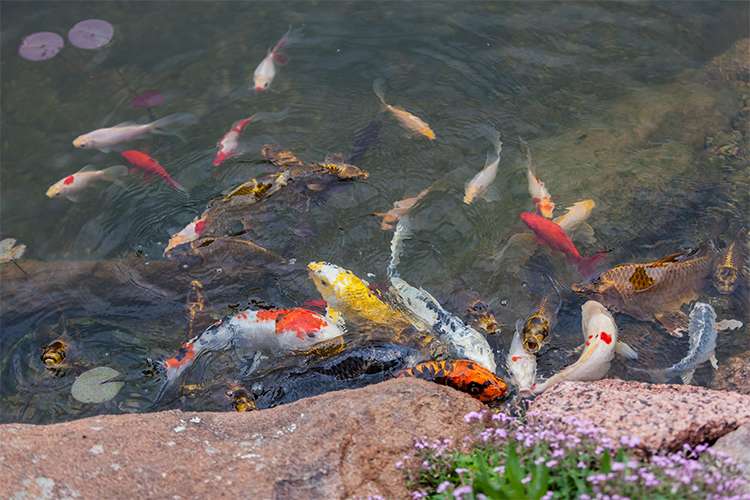
There’s something almost meditative about watching koi glide through clear water, their brilliant colors catching the Colorado sunlight. But here in Superior, building and maintaining a thriving koi pond takes more than just digging a hole and adding fish. Our region’s unique climate, with its dramatic temperature swings, intense UV exposure, and cold winters, demands careful planning when it comes to filtration, depth, and year-round care.
Whether you’re dreaming of a serene backyard retreat or looking to enhance an existing pond, understanding the fundamentals is essential. At J&S Landscape, we’ve spent over 40 years helping homeowners throughout Boulder, Longmont, Superior, and the surrounding areas design, build, and maintain stunning water features. We’ve learned what works in our Colorado climate, and what doesn’t. In this guide, we’ll walk you through everything you need to know about koi pond basics, from proper depth requirements to seasonal maintenance strategies that keep your fish healthy all year long.
Understanding Superior’s Climate for Koi Ponds
Superior sits at an elevation of roughly 5,400 feet, which creates a climate that’s both a blessing and a challenge for koi pond owners. We enjoy nearly 300 days of sunshine annually, but that also means intense UV exposure and significant evaporation rates. Add in winter temperatures that can plummet below zero and summer highs reaching the 90s, and you’ve got conditions that require thoughtful pond design.
The thin mountain air at this elevation means temperature fluctuations happen faster than at sea level. A sunny January afternoon might warm your pond’s surface to 50°F, only for it to drop back into the 20s by nightfall. These rapid swings stress koi, which are cold-blooded and sensitive to temperature changes. That’s why depth, insulation, and proper circulation become so critical here.
Our semi-arid climate also affects water chemistry. Low humidity accelerates evaporation, which concentrates minerals and can throw off pH levels if you’re not monitoring regularly. And while Superior’s tap water is generally good quality, it does contain chlorine and chloramines that must be neutralized before adding to your pond.
The good news? With proper planning, koi ponds thrive in our region. We’ve designed and maintained countless water features throughout Boulder, Superior, Lafayette, and Broomfield that prove it. The key is respecting our climate’s quirks rather than fighting them.
Essential Koi Pond Depth Requirements
Depth isn’t just about aesthetics, it’s about survival. In Superior’s climate, getting your pond depth right determines whether your koi make it through winter and stay comfortable during summer’s heat.
Minimum Depth for Overwintering
Here’s the reality: Superior winters can be brutal. While we don’t typically see the extended deep freezes of states further north, temperatures routinely drop into the single digits, and we occasionally experience stretches below zero. For koi to safely overwinter outdoors, your pond needs a minimum depth of 3 to 4 feet in the deepest section.
Why so deep? Ice forms on the surface, sometimes reaching 6 to 12 inches thick during prolonged cold snaps. Below that ice, your koi need unfrozen water where they can enter a state of torpor, essentially a metabolic slowdown that helps them survive without eating. Water at the bottom of a properly designed pond stays around 39°F (the temperature at which water is densest), providing a stable refuge.
We generally recommend 4 feet as the sweet spot for Superior. It provides a safety margin for exceptionally harsh winters and gives your fish ample room to retreat. Some pond owners go shallower and rely on pond heaters or de-icers, but that adds ongoing energy costs and introduces more points of failure.
Depth Zones for Koi Health
A well-designed koi pond isn’t uniformly deep, it incorporates multiple depth zones that serve different purposes throughout the year.
Shallow shelves (12-18 inches): These warmer areas are perfect for aquatic plants, which help filter water naturally and provide shade. Koi will visit these zones to forage but won’t linger long in summer when shallow water overheats.
Mid-depth zones (2-3 feet): This is where koi spend most of their active time during spring and fall. Water temperatures here are moderate, and fish can easily move between depths as conditions change.
Deep zones (3.5-4+ feet): Essential for both winter survival and summer comfort. During July and August, surface temperatures can climb into the 80s, which stresses koi. A deep zone stays cooler, giving fish a thermal refuge. Come winter, this is their survival chamber.
We often design ponds with gradually sloping sides that create these natural transitions. It looks more organic and allows koi to self-regulate their depth based on comfort.
Choosing the Right Filtration System
Koi are messy fish. A single adult koi can produce substantial waste, and without adequate filtration, your pond will quickly turn into a murky, ammonia-laden mess. Effective filtration combines two complementary approaches: mechanical and biological.
Mechanical Filtration
Mechanical filtration physically removes debris, leaves, fish waste, uneaten food, and sediment, from your pond water. Think of it as the first line of defense.
Common mechanical filtration components include:
- Skimmers: Installed at the water’s edge, skimmers pull floating debris off the surface before it sinks and decays. In Superior, where cottonwood fluff and autumn leaves are constant visitors, a good skimmer is essential.
- Bottom drains: These pull settled debris from the pond floor toward your filter system. Properly installed bottom drains make maintenance significantly easier.
- Filter pads and brushes: Located in your external filter unit, these physically trap particles as water passes through.
The rule of thumb? Your entire pond volume should cycle through the filtration system at least once per hour, twice per hour is even better. For a 2,000-gallon pond, that means a pump capable of moving 2,000 to 4,000 gallons per hour.
Biological Filtration
While mechanical filtration handles visible debris, biological filtration tackles the invisible killer: ammonia. Koi excrete ammonia through their gills and waste, and even small concentrations are toxic.
Biological filtration relies on beneficial bacteria colonies that convert ammonia into nitrite, then nitrite into relatively harmless nitrate. These bacteria need surface area to colonize, which is why bio-filters contain media like:
- Bio-balls: Plastic spheres with high surface area
- Lava rock: Natural and porous
- Ceramic rings or beads: Engineered for maximum bacteria colonization
- Filter mats: Provide both mechanical and biological filtration
One thing we always tell clients: biological filtration takes time to establish. When you first set up a pond, or restart it in spring, the beneficial bacteria need 4 to 6 weeks to fully colonize. During this “cycling” period, ammonia and nitrite levels spike, which is dangerous for fish. We recommend adding fish gradually and testing water parameters frequently during this critical window.
In our experience, many pond problems trace back to undersized or poorly maintained filtration. It’s worth investing in quality equipment upfront rather than cutting corners.
Seasonal Koi Pond Care in Superior
Koi pond care isn’t a set-it-and-forget-it try, especially in Colorado. Each season brings distinct challenges and tasks. Here’s how we approach the annual cycle.
Spring Startup and Maintenance
Spring is arguably the most critical time for koi pond care. As temperatures climb above 50°F consistently, your fish emerge from their winter torpor with weakened immune systems, and pathogens start becoming active.
Our spring checklist includes:
Inspect equipment: Before firing everything up, check your pump, filter, and UV clarifier (if you have one) for damage from winter. Replace worn seals, clean impellers, and ensure electrical connections are sound.
Clean the pond: Remove accumulated debris from the bottom. A pond vacuum makes this easier. Don’t do a complete water change, you’ll destroy beneficial bacteria. Instead, aim to replace no more than 20-30% of the water.
Restart filtration gradually: Your bio-filter bacteria are dormant. They need time to reactivate, so don’t overstock or overfeed while the system re-establishes.
Begin feeding carefully: Start with easily digestible wheat germ-based food when water temperatures consistently reach 50-55°F. Feed sparingly, koi metabolisms are still sluggish. As temperatures climb above 60°F, you can transition to higher-protein foods.
Monitor water quality: Test ammonia, nitrite, nitrate, and pH weekly during spring. Early intervention prevents fish loss.
Winter Preparation and Protection
Prepping your pond for winter starts in fall, ideally before the first hard freeze.
Stop feeding: When water temperatures drop below 50°F, stop feeding entirely. Koi can’t digest food at cold temperatures, and undigested food can rot in their systems.
Clean thoroughly: Remove fallen leaves and debris. Netting over the pond during peak leaf-drop saves significant effort.
Trim plants: Cut back dying foliage from aquatic plants so it doesn’t decompose in the water over winter.
Maintain gas exchange: Ice covering your pond traps harmful gases. Install a floating de-icer or aerator to maintain an opening in the ice. Never break ice by striking it, the shockwaves stress fish.
Shut down or modify equipment: In Superior, many pond owners turn off waterfalls and fountains to prevent super-cooling and ice damage. Keep a small pump running at the bottom to provide gentle circulation without chilling the water.
At J&S Landscape, we offer full-service maintenance including winterizing koi ponds, taking the guesswork out of seasonal transitions for busy homeowners.
Water Quality and Feeding Best Practices
Crystal-clear water and healthy koi go hand in hand. But clarity alone doesn’t guarantee quality, you need to monitor the invisible parameters that determine whether your fish thrive or merely survive.
Key water parameters to track:
| Parameter | Ideal Range | Notes |
|---|---|---|
| Ammonia | 0 ppm | Any detectable level is concerning |
| Nitrite | 0 ppm | Toxic to fish: indicates cycling issues |
| Nitrate | Under 40 ppm | Controlled through water changes |
| pH | 7.0-8.5 | Koi tolerate range but dislike swings |
| KH (alkalinity) | 100-200 ppm | Buffers pH stability |
Invest in a quality test kit, not just test strips, and check weekly during active months. Monthly testing suffices in winter when the pond is dormant.
Feeding guidelines:
Koi are enthusiastic eaters and will consume far more than they should if given the chance. Overfeeding leads to excess waste, which overwhelms filtration and tanks water quality.
Feed only what your fish can consume in 3-5 minutes, two to three times daily during warm months. In spring and fall, once daily is sufficient. Use seasonal formulas: wheat germ-based in cooler temperatures, high-protein during summer growth periods.
Avoid cheap foods packed with fillers. Quality koi food costs more upfront but produces less waste and healthier fish. And never feed bread, crackers, or human food scraps, even though what you might see at public ponds.
Water changes:
Regular partial water changes, 10-20% weekly, dilute nitrates and replenish minerals that get depleted over time. Always treat new water with a dechlorinator before adding it to your pond. In Superior, our municipal water contains chloramines, which are more persistent than chlorine and require specific treatment products.
Conclusion
Building a successful koi pond in Superior isn’t complicated, but it does require respecting the realities of our Colorado climate. Adequate depth protects your fish through frigid winters. Proper filtration, both mechanical and biological, keeps water clean and safe. And consistent seasonal care ensures your koi thrive year after year rather than just surviving.
The most common mistakes we see? Ponds built too shallow, filtration systems undersized for the fish load, and neglecting the critical spring and fall transition periods. Avoid these pitfalls, and you’re well on your way to enjoying a beautiful, healthy water feature.
Of course, designing and maintaining a koi pond takes time and expertise that not everyone has. At J&S Landscape, we’ve been bringing water features to life throughout Boulder, Superior, Lafayette, Broomfield, and the surrounding areas for over four decades. From initial design and construction to ongoing maintenance, including winterizing and spring startups, our team handles every detail so you can simply enjoy watching your koi.
Ready to transform your backyard into a tranquil retreat? We’d love to listen to your vision and help make it reality.