
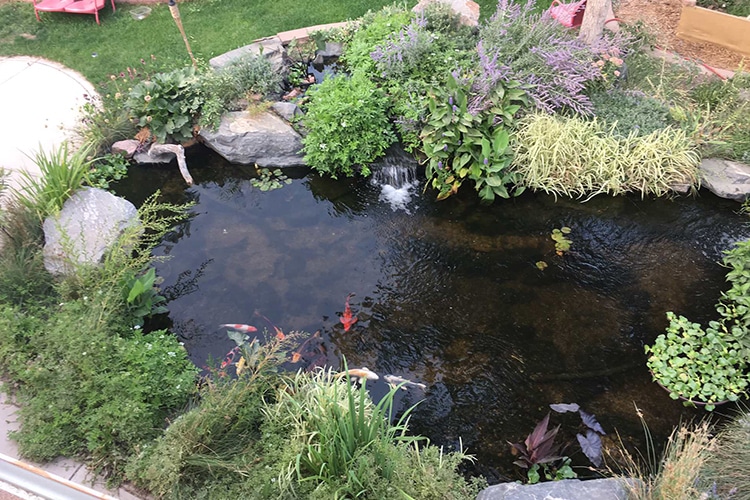
There’s something undeniably peaceful about watching koi glide through crystal-clear water, their vibrant colors catching the sunlight as they drift beneath the surface. But here’s the thing: creating that idyllic scene in Longmont takes more than just digging a hole and adding fish. Between our Colorado climate’s dramatic temperature swings and the high-altitude challenges unique to this region, koi pond ownership requires thoughtful planning from day one.
At J&S Landscape, we’ve spent over 40 years designing, building, and maintaining water features throughout Boulder, Longmont, and the surrounding communities. We’ve seen firsthand what works, and what doesn’t, when it comes to keeping koi healthy in Northern Colorado. In this guide, we’ll walk you through the essential elements of koi pond success: proper depth requirements for our climate, filtration systems that actually work, and year-round care strategies that’ll keep your fish thriving through scorching summers and frigid winters alike.
Understanding Koi Pond Depth Requirements
Depth isn’t just about aesthetics, it’s about survival. Koi are cold-water fish, but they have limits. Too shallow, and your pond becomes a temperature rollercoaster that stresses fish and promotes disease. Too deep, and you’re spending money unnecessarily while making maintenance more difficult.
The general rule for koi ponds is a minimum depth of 3 feet, but that’s really the bare minimum for moderate climates. Your pond’s depth directly affects water temperature stability, oxygen levels, and your koi’s ability to escape predators like herons. Deeper water also provides refuge zones where fish can retreat during extreme weather, something we deal with regularly here in Colorado.
Minimum Depth for Longmont’s Climate
Longmont presents some unique challenges that many generic koi guides don’t address. We sit at roughly 5,000 feet elevation, which means more intense UV exposure, lower atmospheric pressure, and temperature swings that can hit 40-50 degrees in a single day during spring and fall.
For Longmont and the surrounding Front Range communities, we recommend a minimum depth of 4 feet for any serious koi pond. Here’s why:
Winter survival: Our winters regularly see temperatures dropping well below freezing for extended periods. A 4-foot depth ensures that even when surface ice forms, sometimes 8 to 12 inches thick, there’s still adequate unfrozen water below where koi can safely overwinter in their dormant state.
Summer cooling: July and August in Longmont can push into the 90s. Deeper water stays cooler at the bottom, giving koi an escape from surface temperatures that can climb into the danger zone (above 85°F).
Predator protection: Great blue herons are common along the Front Range, and they’re remarkably patient hunters. A depth of 4 feet or more makes it much harder for these wading birds to reach your prized fish.
If you’re planning a larger pond, say, 1,000 gallons or more, consider going to 5 or even 6 feet in the deepest section. The added buffer provides extra insurance against our unpredictable Colorado weather, and your koi will thank you for it.
Essential Filtration Systems for Healthy Koi
Let’s be honest: koi are messy. They produce significant waste, and without proper filtration, your beautiful pond will quickly turn into a green, murky mess that’s dangerous for fish and unpleasant to look at. Good filtration isn’t optional, it’s the single most important investment you’ll make in your pond’s long-term success.
A proper koi pond filtration system does three things: it removes solid waste particles, it converts toxic ammonia into less harmful compounds, and it keeps water circulating to maintain oxygen levels. Skip any of these functions, and you’re setting yourself up for problems.
Mechanical and Biological Filtration
Mechanical filtration is the first line of defense. It physically removes debris, fish waste, uneaten food, and organic matter from the water before it can decompose. Common mechanical filtration methods include:
- Skimmers: These pull floating debris off the surface before it sinks and decays
- Bottom drains: Installed at the pond’s lowest point to remove settled waste
- Filter pads and brushes: Trap particles as water passes through
- Settling chambers: Allow heavy particles to sink out of the water column
Biological filtration is where the real magic happens. Beneficial bacteria colonize filter media and convert ammonia (extremely toxic to koi) into nitrite, then into nitrate (much less harmful). This nitrogen cycle is essential for any healthy koi pond.
Biological filter media includes things like bio-balls, lava rock, ceramic rings, and specialized plastic media designed to maximize surface area for bacterial colonization. The key is providing enough media surface area and maintaining proper water flow, too fast, and bacteria can’t do their job: too slow, and you don’t process enough water.
We often recommend adding UV clarifiers to the filtration setup as well. These don’t replace mechanical or biological filtration, but they do eliminate free-floating algae that causes green water, and they help control harmful pathogens.
Sizing Your Filtration System
Here’s where many pond owners go wrong: they undersize their filtration. The old rule of thumb was to turn over your entire pond volume once per hour. For koi ponds, we suggest going bigger, aim for turnover every 30 to 45 minutes.
So if you have a 2,000-gallon pond, your pump and filtration system should handle at least 2,500 to 4,000 gallons per hour. Yes, this means a larger upfront investment. But trust us, it’s far easier (and cheaper) to install adequate filtration from the start than to upgrade later when you’re battling water quality problems.
Other sizing considerations:
- Fish load: More koi means more waste. A lightly stocked pond can get away with smaller filtration: a heavily stocked pond needs serious capacity.
- Sun exposure: Full-sun ponds grow algae faster and may need additional UV clarification.
- Nearby trees: Falling leaves mean extra debris load on your mechanical filtration.
When we design koi ponds for clients in Longmont and Boulder County, we always account for these variables. There’s no one-size-fits-all answer, which is why a professional consultation can save you headaches down the road.
Year-Round Koi Care in Longmont
Koi care isn’t a set-it-and-forget-it proposition. These fish can live 25 to 35 years (some even longer), and maintaining their health through Longmont’s four distinct seasons requires attention and adaptation throughout the year.
The good news? Once you understand the seasonal rhythms, caring for koi becomes second nature. The bad news? Ignore these rhythms, and you’ll face sick fish, water quality disasters, and potentially devastating losses.
Seasonal Feeding and Maintenance
Spring (March-May): As water temperatures rise above 50°F, your koi will start becoming active again after winter dormancy. Begin feeding with easily digestible wheat germ-based foods, starting with small amounts every few days. Their metabolism is still sluggish, and overfeeding can cause serious digestive issues. This is also prime time for a thorough pond cleaning, remove accumulated debris, check your filtration system, and test water quality.
Summer (June-August): Peak activity season. Water temperatures between 65-75°F mean maximum metabolism, so koi can handle high-protein foods and more frequent feeding (2-3 times daily). Watch water temperatures carefully during heat waves, if temps exceed 85°F, reduce feeding since koi appetites decrease and uneaten food fouls the water. Keep an eye on oxygen levels: warm water holds less dissolved oxygen.
Fall (September-November): As temperatures drop below 65°F, start transitioning back to wheat germ foods. When water hits 50°F, stop feeding entirely. Koi can’t properly digest food at cold temperatures, and undigested food in their systems can cause fatal infections over winter. Clean your pond thoroughly before winter sets in, you want minimal organic matter decomposing under the ice.
Winter (December-February): Minimal intervention is best. Your koi enter a torpid state, barely moving and not eating at all. Keep a hole in the ice for gas exchange (more on this below), and resist the urge to disturb them.
Winterizing Your Koi Pond
Winterizing is where Longmont pond owners face their biggest challenge. Our winters are cold enough to cause problems but usually not so severe that koi can’t survive outdoors, if you prepare properly.
Step 1: Stop feeding when water temperatures consistently stay below 50°F. This typically happens in late October or early November around here.
Step 2: Clean thoroughly. Remove as much debris, leaves, and muck as possible. Decomposing organic matter produces toxic gases that can accumulate under ice.
Step 3: Maintain gas exchange. This is critical. Koi don’t need much oxygen during dormancy, but they do need some, and toxic gases like hydrogen sulfide must escape. Options include:
- Floating de-icers that keep a small area ice-free
- Air pumps with airstones placed in shallower water (not the deep zone where koi rest)
- Never break ice by hitting it, the shockwaves can stress or kill dormant koi
Step 4: Reduce water flow. You want some circulation, but avoid creating currents in the pond’s deepest section. Koi need that still, slightly warmer water to rest undisturbed.
Many of our clients in Longmont, Boulder, and Broomfield opt for professional winterization services. We handle everything from fall cleanouts to de-icer installation, giving you peace of mind that your fish will survive until spring.
Water Quality Management
You can have the perfect depth and the best filtration system money can buy, but if you’re not monitoring and managing water quality, your koi will suffer. Period.
The four key parameters every koi pond owner should track:
Ammonia: Should always be at 0 ppm. Any detectable ammonia indicates a problem, either your biological filtration is overwhelmed, you’re overstocking, or you’re overfeeding. Ammonia burns fish gills and can be fatal even at low concentrations.
Nitrite: Also should be at 0 ppm in an established pond. Elevated nitrite means your biological filter’s nitrogen cycle isn’t completing properly.
Nitrate: The end product of the nitrogen cycle. Levels under 40 ppm are acceptable, though lower is better. Regular partial water changes help keep nitrates in check.
pH: Koi prefer a pH between 7.0 and 8.6, with stability being more important than hitting a perfect number. Rapid pH swings stress fish far more than a slightly high or low reading.
We recommend testing weekly during active seasons and at least monthly during winter. Quality test kits cost $20-40 and take just minutes to use. It’s cheap insurance.
Beyond these basics, consider:
- Oxygen levels: Especially important in summer and if you have heavy stocking. Aerators, waterfalls, and fountains all help.
- Water hardness (KH and GH): Affects pH stability and overall water chemistry. Our Longmont tap water is moderately hard, which is actually beneficial for koi ponds.
- Temperature: A floating thermometer helps you track conditions and know when to adjust feeding schedules.
Partial water changes, replacing 10-20% of pond water weekly or biweekly, remain one of the simplest and most effective water quality tools. Fresh water dilutes accumulated nitrates and replenishes minerals that get depleted over time. Just be sure to dechlorinate tap water before adding it, as chlorine and chloramine are toxic to fish.
Conclusion
Building and maintaining a healthy koi pond in Longmont isn’t complicated, but it does require understanding our local climate and committing to consistent care. Get your depth right from the start, 4 feet minimum for our Front Range winters. Invest in adequate filtration that handles both mechanical debris removal and biological waste processing. Adapt your care routines to the seasons, especially when it comes to feeding and winterization. And stay on top of water quality testing.
Do these things, and you’ll enjoy years of watching gorgeous koi thrive in your backyard. Skip them, and you’ll spend far more time and money fixing problems than you ever would have spent doing things right the first time.
At J&S Landscape, we bring over four decades of water feature expertise to every pond project we take on. Whether you’re dreaming of a new koi pond surrounded by natural stone, need help troubleshooting an existing setup, or want professional maintenance to handle the details for you, our team is here to help. We serve Boulder, Longmont, Niwot, Lafayette, Broomfield, Louisville, Fort Collins, and communities throughout Northern Colorado. Reach out for a consultation, we’d love to help you create your own tranquil retreat.